What is a cold sore?
A cold sore is caused by the Herpes Simplex Virus. Cold sores are formed on the lips or around the mouth. SoreFix Rescue helps you get rid of your cold sore faster.


Cold sore
A cold sore is a common contagious condition caused by the Herpes Simplex Virus. Up to 67% of people are infected with the virus. However, 1 in 4 experience multiple outbreaks per year. The cause is difficult to combat, but you can try to keep the discomfort under control.
What is a cold sore?
Cold sores are also called fever blisters. They are usually formed on the lips or around the mouth. Cold sore is the most common viral infection and is caused by Herpes Simplex Virus – type 1 (HSV-1). Once you have been exposed to the HSV-1 virus, you will carry the virus for the rest of your life.
The cold sore is a fluid-filled blister that causes the skin to swell and appear red. The blisters are usually painful. When these blisters fill with fluid, the top layer is very sensitive. This can lead to irritation from rubbing/friction and result in an unpleasant infection. If cold sore balm is applied in time, the chance of scarring is small.
In most cases, the blisters tend to return. Unlike most viruses, HSV-1 enters your body and never leaves it. Usually, the virus is not active. When the virus becomes active, you get a cold sore.
The Herpes Simplex Virus
Cold sores are caused by the herpes simplex virus. The herpes simplex virus usually enters the body through damaged skin around or in the mouth. There are 2 types of herpes simplex viruses: HSV-1 and HSV-2. Both viruses can cause sores around the mouth and genitals. A cold sore is usually caused by HSV-1. HSV-2 causes genital herpes, SoreFix is not suitable for the treatment of genital herpes. Consult your doctor for this.
Usually, the virus is not active. When the virus becomes active, you get a cold sore.
How is the Herpes Simplex Virus transmitted?
The virus is transmitted when someone touches the cold sore or the fluid from the blister – for example by sharing cutlery, cups, razors, or by kissing a person infected with the HSV-1 virus or coming into contact with their saliva. Infection in children often occurs in the latter way.
Cold sore causes
A cold sore is a painful infection caused by the herpes simplex virus. You can get the virus through hands, forms of contact such as kissing and by drinking from the same glass as someone with a cold sore.
Once you have been exposed to the virus, you will carry it for the rest of your life. Usually, the virus is not active. When the virus becomes active, you get a cold sore.
Cold sore triggers
To prevent cold sores, you should try to avoid the triggers that activate the virus. Most people know when a cold sore is about to occur. There are several triggers for activating (the herpes simplex virus) a cold sore, these vary per person. The most common triggers are:

Fatigue

Reduced resistance

Fever and cold
Cold weather conditions
Exposure to sunlight
Menstruation
Dry or chapped lips
Stress
Cold sore treatment
A cold sore can be very unpleasant and painful. The cause is difficult to combat, but you can try to keep the discomfort under control.
SoreFix Prevent Cold Sore Lip Balm is a unique zinc formula that can prevent a cold sore. Contains SPF30 and nourishing oils to keep the lips healthy.
SoreFix Rescue Cold Sore Cream helps you get rid of your cold sore invisibly. The cream works in all 4 phases, from tingling to scab. In addition, the cream shortens the duration of a cold sore due to the unique zinc formula.
If you have a cold sore, the infection goes through four phases over 7 to 10 days. Sometimes it can last two weeks or longer. Consult a doctor if a cold sore lasts longer than 14 days. SoreFix works in every phase of the cold sore:
How does the unique transparent zinc formula work?
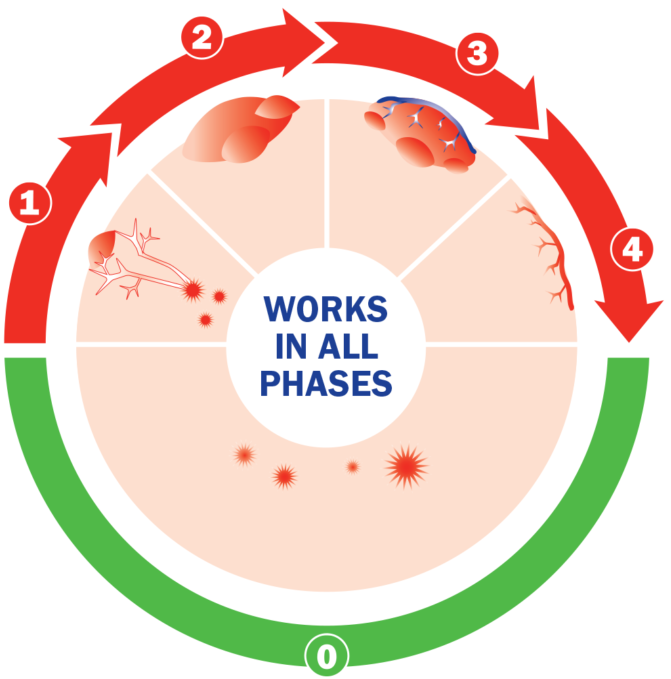

Tingling
SoreFix Rescue relieves the tingling.

Blisters
SoreFix Rescue reduces the blisters.

Open blisters
SoreFix Rescue dries out blisters, shortens recovery period.

Scabs
SoreFix Rescue prevents scab breakage.

Cold sore virus is inactive
SoreFix Prevent blocks triggers, improves lip condition.
Zinc is recommended for cold sores
For cold sores, pharmacists and general practitioners in the Netherlands recommend the use of zinc oxide (or zinc sulfate) creams. 1 Zinc has many benefits for your skin. It protects and dries the skin, inhibits the spread of the Herpes Simplex Virus, and reduces the duration and severity of the cold sore. Zinc also helps to dry out the blisters, reduces itching and promotes healing, allowing you to recover faster. In addition, zinc protects your skin against the sun, a common trigger for cold sores, by absorbing UVA and UVB rays. SoreFix Rescue is a zinc ointment specifically developed to accelerate the healing process of cold sores and is effective in all four phases of a cold sore.
Aciclovir is not recommended for cold sores
Aciclovir is discouraged by pharmacists in the Netherlands for the treatment of cold sores. This is because it is not very effective and there is a risk of developing resistance to antiviral agents, which may be needed for more severe viruses. In addition, aciclovir can have side effects such as mild tingling and burning sensation.
Cold sores and babies
A cold sore can be dangerous for a baby. Prevent a baby from coming into contact with your cold sore. Prevent the spread of the virus by washing the baby’s hands properly and avoid kissing your baby until the cold sore has disappeared.
Anyone can transmit the virus to a baby through a kiss or a cuddle.
Most people contract the herpes simplex virus during childhood. During a first outbreak, the following symptoms may be visible in a baby:
- Blisters on or around the mouth
- Pain in the mouth
- Fever
- Poor drinking
- Drowsiness
- Inflammation of the gums
A cold sore can be dangerous for a baby. If a baby is younger than 3 months and shows these symptoms, consult a doctor immediately.
Dangers of cold sores for babies
A cold sore can be dangerous for a baby. If a baby is younger than 3 months and shows these symptoms, consult a doctor immediately. SoreFix is not suitable for the treatment of these symptoms in babies. Especially in young children, the virus can spread to other parts of the body.
Prevent your baby from touching your cold sore. Prevent the spread of the virus by also washing the baby’s hands properly. The use of socks on the hands is recommended during sleep.
If you have a cold sore, avoid kissing your baby, especially a newborn, until the cold sore has disappeared. A single touch with an infected lip is sufficient to transmit the virus. A baby can also contract it during birth if the mother has genital herpes.
If your child is prone to cold sores, protect them from excessive sunlight. Use a hat and lip balm as protection. SoreFix Prevent can be used from the age of 4.
SoreFix tips for a cold sore
Preventing cold sores:
Do’s |
Don’ts |
 Ensure sufficient sleep Ensure sufficient sleep |
 Kissing a person with a cold sore Kissing a person with a cold sore |
| Avoid triggers |
Exposure to bright sunlight |
| Recognize the symptoms |
Biting your lips |
| Eat healthy |
Sharing towels, razors, toothbrushes or kitchen utensils with a person who has a cold sore |
| Keep lips moisturized with a fatty lip balm |
If you have a cold sore:
Do’s |
Don’ts |
| Sleep and relax |
Kissing |
| Wash hands thoroughly with soap and warm water |
Touching the cold sore |
| Protect babies and young children |
Eating salty and sour food |
| Apply the product for treating the cold sore only on the infected area |
Sharing towels, razors, toothbrushes or kitchen utensils with a person who has a cold sore |
| Be careful when applying and removing make-up |
Scratching open the scab |
| Be extra careful with contact lenses (clean hands) |